|
A new path
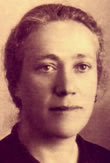
 In Banyoles — a city in Catalonia enriched by the beauty and serenity of the waters of its lake, geographically open through the Pyrenees toward other frontiers — on December 13, 1897, a new hope for our times was born: Magdalena Aulina.
A Christian family—the household of Narcís Aulina and Carmen Saurina—saw their home enriched by the birth of their sixth daughter.
As the years went by, Magdalena’s sisters chose their own paths: two of them entered religious life. Magdalena too, tireless in her self-giving to others, wished to consecrate herself to Jesus Christ. Yet her vocation was marked by a particular way of dedicating herself to her neighbor, with special attention to those most in need.
To fulfill this gift of the Spirit, which had inspired her since childhood, an endless horizon was needed—spaces far broader than those a traditional religious congregation could offer.
La intuición de Magdalena comenzó a tomar forma de consagración secular; es decir, un abandono total a Cristo, pero vivido en medio de la gente, compartiendo penas y alegrías, y haciéndose amiga de todos, la consejera en cualquier tipo de problema.
The act of “self-giving” was what moved her to serve Christ in her brothers and sisters—her charism—and the path she traced for a faithful following of Christ and His Gospel.
From this vision of hers, the fruit of a particular call from God, united with her love and devotion to the Virgin Mary, there arose in 1916 a new path unknown in those times: consecrated secularity in the midst of the world, to carry out evangelization at any moment and without borders, “in the open field,” for the glory of God and the good of humanity.
|